A Chain of Lights in the Sky: What Is This "Train" of Glowing Dots
A neat string of lights flying one after another across the sky is Starlink satellites after launch. Why they're visible only for the first few days, when to look, and how to tell them from the ISS, a plane, and a UFO.
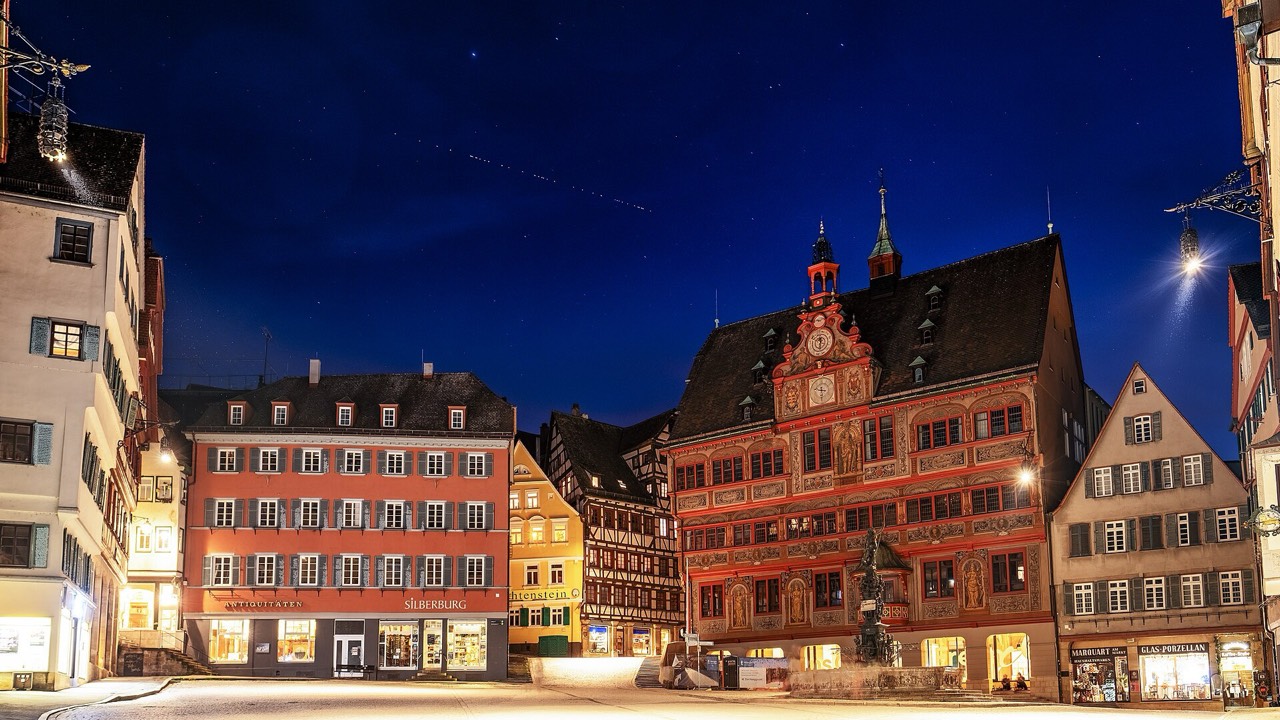
In the evening you look up and see something strange: a neat chain of lights, all equally bright, flying one after another like train cars. There are ten, twenty, thirty of them. They cross the whole sky in silence and fade out. This isn't a UFO or military drills. These are Starlink satellites, recently put into orbit.
What it is
Starlink is SpaceX's satellite internet service. There are already more than nine thousand of its satellites in orbit, and rockets carrying new batches lift off several times a week. Each rocket carries 20–30 satellites and releases them all together into orbit.
In the first days after launch, the satellites fly in a tight group, one after another, at an altitude of about 300 km. That's the "train." Then each one fires its engine and over a few weeks climbs to its working orbit at about 550 km. The chain stretches out, spreads apart, and the satellites become barely noticeable.
Why they're visible only for the first few days
The satellites don't glow on their own. They reflect sunlight, like the Moon.
Right after launch the satellites are low, and their large solar panels are turned toward the Sun like mirrors — so they're bright. Once a satellite reaches its working orbit, it's twice as far away and is oriented to reflect less light toward Earth. The company did this after complaints from astronomers. That's why working Starlink satellites usually aren't visible to the naked eye, or appear as very faint points.
Bottom line: a bright "train" is always a fresh launch, usually no more than one or two weeks old.
When you can see them
At twilight. A satellite is visible only when it's still lit by the Sun while it's already dark on the ground where you are. This happens in the first 1–2 hours after sunset and the last 1–2 hours before sunrise. In the middle of the night the satellites pass into Earth's shadow and go dark — sometimes right before your eyes, in the middle of the sky.
In summer — all night. In June and July at mid-northern latitudes the Sun doesn't go far below the horizon, and the satellites stay lit almost until morning. That's why "trains" are seen more often in summer.
Right after launch. You can track pass predictions for a specific "train" on websites and apps like Heavens-Above or Find Starlink.
How to tell them from everything else
| What you see | What it is |
|---|---|
| A chain of identical dots flying one after another | Starlink after launch |
| One very bright dot moving smoothly for 3–6 minutes | The ISS |
| One faint dot drifting across the sky | An ordinary satellite |
| A dot blinking, with red and green lights | An airplane |
| A flash with a tail lasting a fraction of a second | A meteor |
| A dot standing still, possibly twinkling | A star or planet |
For more on how to tell a star from a planet and a satellite, see the article "What Is That Bright Star in the Sky". And for the brightest satellite of all, the ISS, see "When and Where the ISS Is Visible".
Why astronomers are unhappy
Thousands of satellites look beautiful at twilight, but they interfere with science. On long telescope exposures they leave bright streaks, and in a few years there will be tens of thousands of satellites in orbit — not just from SpaceX. Companies are darkening their spacecraft, but the question of how to preserve the dark sky remains open.
Q&A
What is that chain of lights in the evening sky?
Almost certainly Starlink satellites recently put into orbit. They fly in a tight group for the first days after launch.
Why do the lights go out in the middle of the sky?
The satellites reflect sunlight. When they enter Earth's shadow, there's nothing left to reflect, and they disappear.
Is it dangerous?
No. The satellites fly at altitudes of hundreds of kilometers and burn up in the atmosphere within a few years, never reaching the ground.
How can I find out when the next "train" will pass?
Passes are calculated on the Heavens-Above website and in the Find Starlink app for your location. Your best chances are in the first week after launch.
Can I photograph the "train"?
Yes. Put your phone on a support, use night mode or a 5–10 second exposure — and the chain will turn into a dotted line of bright streaks. For how to set up your camera, see the article "How to Photograph the Night Sky with a Phone".
The AstroTools app doesn't show Starlink "train" passes, but it does show ISS passes: time, direction, and brightness for your city, with a reminder a few minutes beforehand. It will also tell you whether the sky will be clear.
Plan your observing with AstroTools
Weather, the Moon, light pollution and satellite passes — in one app.