Perseids 2026: when the meteor shower peaks and how to watch it
The Perseid meteor shower peaks on the night of August 12–13, 2026 — under a new Moon for the first time in years.
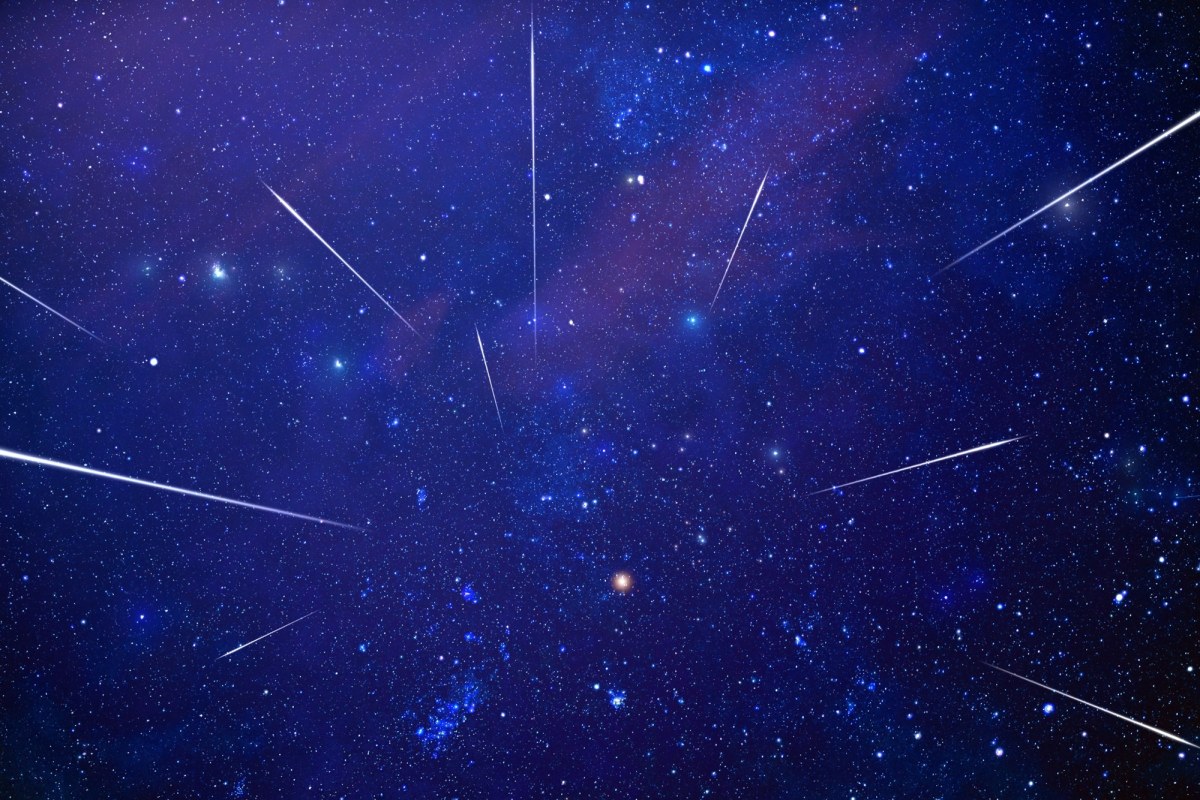
If you've been searching for "meteor shower tonight" or "when is the next meteor shower in 2026" — you're almost certainly looking for the Perseids. It is the most famous meteor shower of the northern hemisphere: warm August nights, up to a hundred meteors per hour, and in 2026 a peak that coincides with the new Moon. That combination comes along only once every few years.
When to watch the Perseids in 2026
The shower is active from July 17 to August 24 — stray "August shooting stars" can be caught for almost a month. But the real show happens in a narrow window around the maximum:
- The peak is the night of August 12–13, 2026.
- Activity stays high on the neighbouring nights too: August 11–12 and 13–14.
- The best time is after midnight until dawn. Towards morning the radiant climbs higher and Earth turns to face the stream, so rates rise sharply. In the evening of August 12 you'll see occasional meteors; after 1–2 a.m. — dozens.
Under a dark rural sky at maximum you can realistically count 60–90 meteors per hour; the theoretical ZHR of the Perseids is around 100.
What the Perseids are
Every August, Earth crosses the dust trail left by comet 109P/Swift–Tuttle. Sand-grain-sized particles hit the atmosphere at about 59 km/s and burn up as bright streaks. Perspective makes all of them appear to fly out of one point — the radiant in the constellation Perseus, which gives the shower its name.
The Perseids are famous for bright meteors and fireballs that leave glowing trains lasting several seconds. You shouldn't stare at Perseus itself though: the longest, most beautiful meteors flash 40–60° away from the radiant — just lie back and take in as much sky as you can.
2026 conditions: a new-Moon peak
The main enemy of any meteor shower is not street lights but the Moon. In recent years a bright Moon washed out most of the fainter Perseids. 2026 is different: August 12 is a new Moon, so it won't rise at all during the peak night.
That means a genuinely dark sky all night — you'll see not only the bright fireballs but also the faint meteors that vanish in moonlit years. Moon-wise, the 2026 Perseids are the best meteor shower of the year, and the next peak this favourable is several years away.
Where to watch: get away from light pollution
In a city, even at new Moon, only the brightest meteors survive the glow of street lighting. Driving just 20–30 km out of town multiplies the number of meteors you'll see.
The light pollution map helps you find dark sky nearby: aim for the green and blue zones — Bortle class 3–4, where the Milky Way is visible to the naked eye. Also check which meteor shower is visible tonight — in August the Perseids overlap with the Delta Aquariids, so there will be even more meteors.
How to check the weather
The only thing that can ruin the peak night is cloud. A day or two before August 12, open the astro weather forecast: it shows layered cloud cover several days ahead and a single 0–100 night score. If solid clouds are forecast over your spot, moving 50–100 km towards clear sky often saves the night.
Practical tips
- No telescope needed. Meteors are watched with the naked eye — optics only narrow your field of view.
- Let your eyes adapt. Dark adaptation takes 20–30 minutes, and one glance at a bright phone screen resets it. If you need light, use a red torch.
- Look away from the radiant. Meteors are longest 40–60° from Perseus. After midnight Perseus stands in the north-east.
- Get comfortable. A deck chair or mat, a sleeping bag, a thermos: even an August night gets cold after a couple of motionless hours. Lie so you can see as much sky as possible.
- Plan a backup night. If August 12 is cloudy, the nights of August 11 and 13 deliver only slightly fewer meteors.
Questions & answers
When is the meteor shower in August 2026?
The Perseid peak is the night of Wednesday, August 12 into Thursday, August 13, 2026. The shower is active from July 17 to August 24, and the nights adjacent to the peak are also good.
What time should I watch the Perseids?
The best window is from midnight until dawn: the radiant climbs higher and rates increase. The first meteors appear around 10–11 p.m., but before midnight there are noticeably fewer.
How many meteors will I see?
Under a dark rural sky on the peak night — 60–90 per hour. In a city, several times fewer: light pollution hides the faint ones.
Can I see the meteor shower from a city?
Bright fireballs, yes — but most meteors will be lost in the glow. Better to drive 20–30 km out; the light pollution map will find a dark spot nearby.
Will the Moon interfere in 2026?
No — that's what makes 2026 special: the peak coincides with the new Moon, so there is no Moon in the sky all night. These are the best lunar conditions for the Perseids in years.
To make sure you don't miss the peak, install the AstroTools app: it will notify you before the Perseid maximum, show the cloud forecast for the peak night and score the night with a single number.
Plan your observing with AstroTools
Weather, the Moon, light pollution and satellite passes — in one app.