Meteor showers: how to watch a shooting-star night
A calendar of the year's biggest meteor showers, where shooting stars come from, and how to pick the right night and place to see the most.
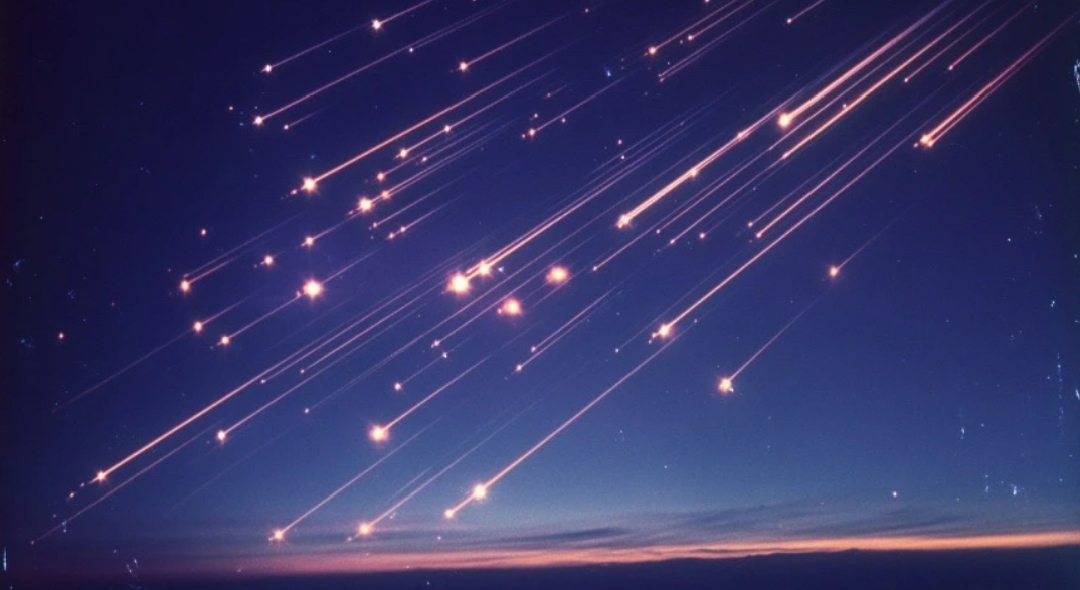
Shooting stars are the most accessible show in astronomy: no telescope, no binoculars — just a dark sky and a little planning. Here's where meteor showers come from and how not to miss the best nights of the year.
Where shooting stars come from
As comets swing past the Sun, they leave a trail of dust behind. When Earth crosses such a trail, the grains slam into the atmosphere at tens of kilometres per second and burn up as bright streaks. That's a meteor shower.
Perspective makes all the meteors appear to fly out of a single point in the sky — the radiant. Showers are named after the constellation that hosts it: the Perseids radiate from Perseus, the Geminids from Gemini.
Calendar of the major showers
| Shower | Peak | Meteors per hour (ZHR) |
|---|---|---|
| Quadrantids | Jan 3–4 | up to 110 |
| Lyrids | Apr 22–23 | ~18 |
| Eta Aquariids | May 5–6 | ~50 |
| Perseids | Aug 12–13 | ~100 |
| Orionids | Oct 21–22 | ~20 |
| Leonids | Nov 17–18 | ~15 |
| Geminids | Dec 13–14 | up to 150 |
ZHR is the theoretical maximum under a perfectly dark sky with the radiant overhead. The real count is always lower, especially in a city — but on a good night out of town, dozens of meteors per hour is a perfectly normal result.
The 2026 Perseids are the show of the year. The August 12–13 peak coincides with a new moon, so the sky stays truly dark all night. Conditions like this come along only once every few years — don't miss it.
👉 See also: which meteor shower is visible tonight and the detailed guide Perseids 2026: when the peak is and how to watch.
How to watch
- Get away from light pollution. A city sky swallows most meteors; 20–30 km out of town is often enough. The light pollution map in the AstroTools app helps you find dark sky nearby.
- Don't stare at the radiant. The longest, most spectacular meteors appear 40–60° away from it — just take in as much sky as you can.
- The best time is after midnight. Towards morning the radiant climbs higher and Earth turns to face the stream head-on, so the rates rise noticeably.
- Let your eyes adjust. Dark adaptation takes 20–30 minutes, and one glance at your phone resets it. No optics needed — just your eyes.
- Make yourself comfortable. A deck chair, a sleeping bag and warm clothes: even an August night gets cold after a couple of motionless hours.
Picking the night
The peak date is only half the job. The rest is decided by clouds and the Moon: a full moon washes out the sky worse than any city. AstroTools shows cloud cover by layer several days ahead, the Moon's phase and rise time, and scores each night's observing quality with a single number.
In short
Pick a shower from the calendar, drive away from the lights, lie back and watch the whole sky after midnight. AstroTools will find you a clear, moonless night around the peak — install the app and set a reminder for the Perseids.
Plan your observing with AstroTools
Weather, the Moon, light pollution and satellite passes — in one app.