Dark adaptation: tune your eyes to the night sky
Your eyes need time to unlock their night vision. Here's how dark adaptation works and how to protect it during a session.
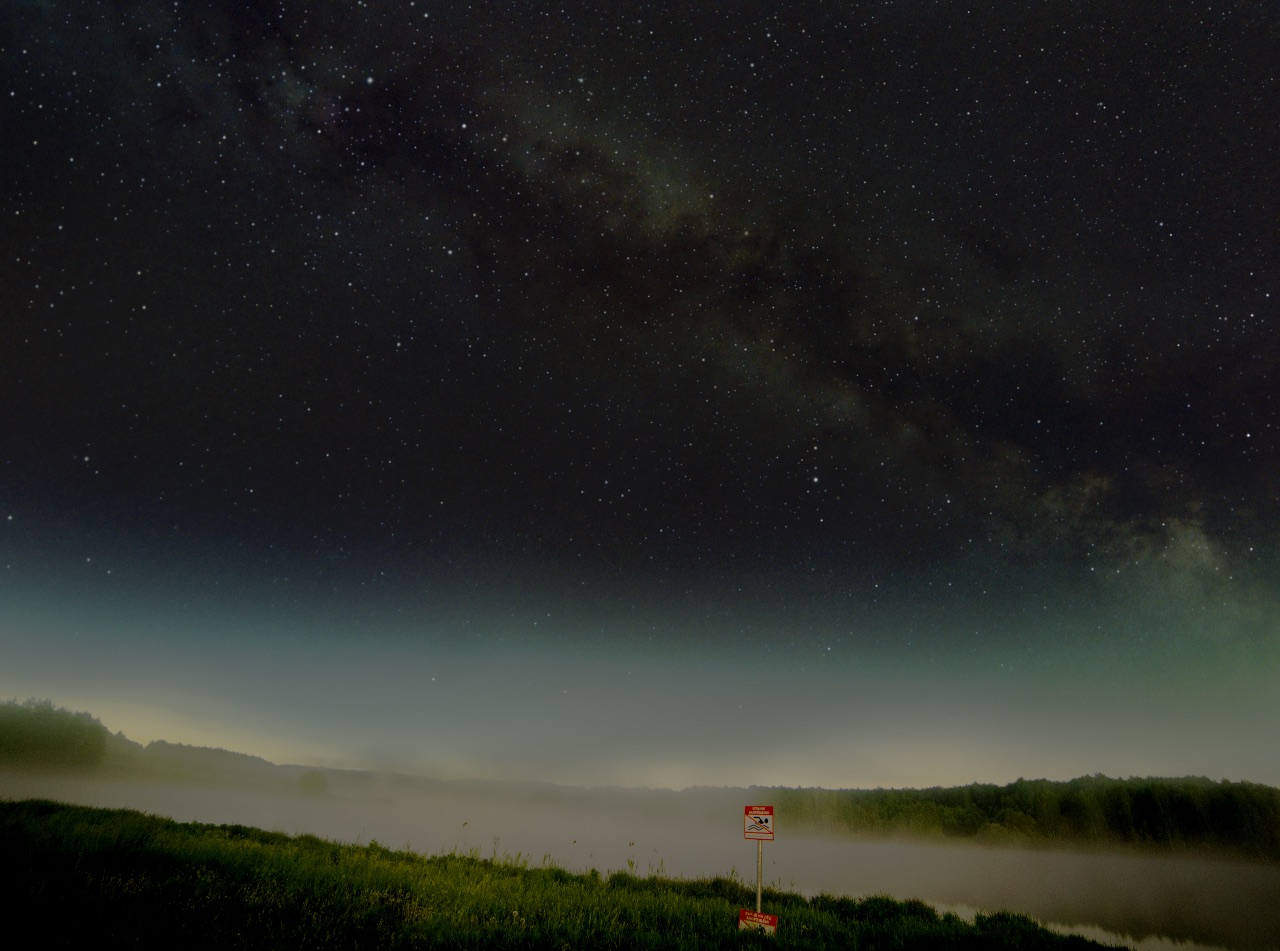
Step outside from a lit room and the sky looks almost empty. Wait twenty minutes without touching your phone, and dozens of stars appear. That's dark adaptation — your eyes switching to night mode — and it's the cheapest upgrade any observer can make.
Why it takes time
In the dark your pupils widen within seconds, but the real gain comes from a pigment called rhodopsin rebuilding in your retina. A rough timeline:
- 5–10 minutes — the biggest early jump in sensitivity;
- 20–30 minutes — you see most of what the night has to offer;
- 40+ minutes — full adaptation, ideal for faint nebulae and galaxies.
One glance can undo it
A single look at a white phone screen or a car headlight resets much of that progress, and you start over. To protect your night vision:
- use a dim red light for maps and gear — red spares rhodopsin;
- switch your phone to its darkest red night mode, or keep it in a pocket;
- don't look at the Moon or bright lights directly.
A trick for faint objects
Don't stare straight at a dim star or galaxy — look slightly to the side of it. This averted vision lands the light on the more sensitive edges of your retina, and the object jumps into view.
Plan the dark
Adaptation only helps under a genuinely dark sky. Use AstroTools to pick a night with a low Moon phase and little cloud, and to find darker skies away from city glow — then give your eyes their twenty minutes.
Clear skies and happy observing!
Plan your observing with AstroTools
Weather, the Moon, light pollution and satellite passes — in one app.