Galaxy NGC 474: Shells and Star Streams
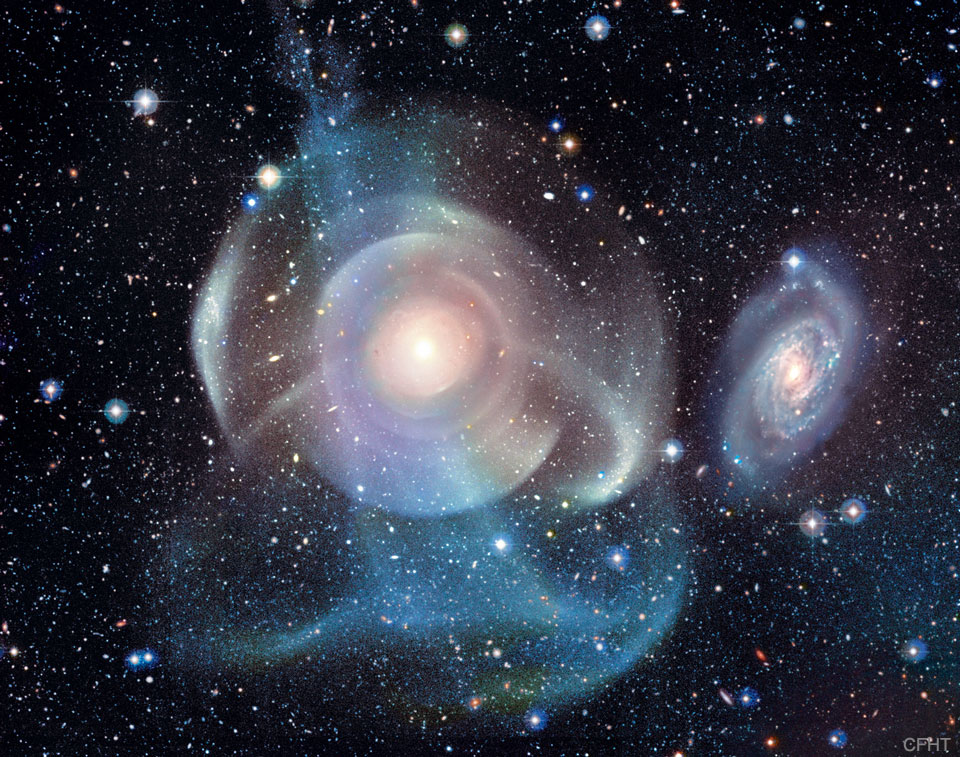
What's happening to galaxy NGC 474?
The multiple layers of emission appear strangely complex given the relatively featureless appearance of the elliptical galaxy in less deep images.
The cause of the shells is a topic of research, but they are possibly tidal tails related to debris left over from absorbing numerous small galaxies in the past billion years.
Alternatively, the shells may be like ripples in a pond, where the ongoing collision with the spiral galaxy just to the right of NGC 474 is causing density waves to ripple through the galactic giant.
Regardless of the actual cause, the featured image dramatically highlights the increasing evidence that the halos of some elliptical galaxies are surprisingly complicated.
Similarly, the halo of our own Milky Way Galaxy is one example of such unexpected intricacies.
NGC 474 spans about 250,000 light years and lies about 100 million light years distant toward the constellation of the Fish (Pisces).
Text from NASA APOD.
How to see it yourself
NGC 474 — galaxy in the constellation Pisces.
- Best seen in September – November, when it stands highest around midnight.
- From New York it climbs to 53° above the horizon. Visible from latitudes -77° to 83°.
- Needs a 150–200 mm telescope and a dark sky outside the city.
- Constellation
- Pisces
- Magnitude
- 11,5m
- Apparent size
- 2,7′ arcminutes
Whether NGC 474 is up for you tonight, and how the clouds and the Moon look — AstroTools shows it.