Meteor Dust
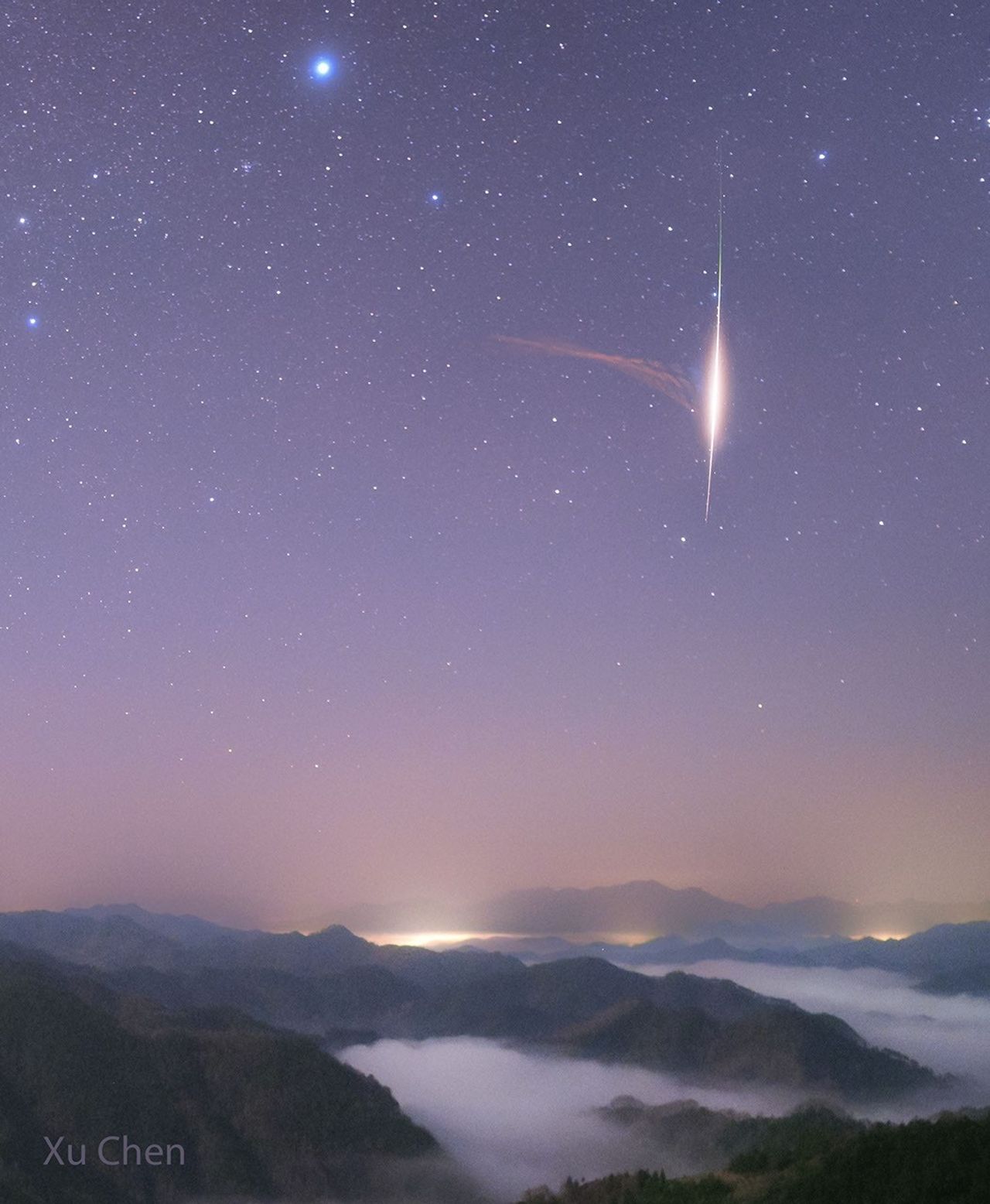
What's happening to this meteor? It is shedding its outer layers as it passes through the Earth's atmosphere and heats up. The sudden high temperatures not only cause the bright glow along the dramatic streak but also melt and vaporize the meteor's component rock and ice, creating dust. Wind in the atmosphere typically blows this dust away over the next few seconds, leaving no visible trace after only a few minutes.
Much of this dust will eventually settle down to the Earth. The featured image was captured in mid-December, coincident with the Geminids meteor shower. On the upper left is Sirius, the brightest star in the night sky, while in the foreground is fog-engulfed Huangshan, the Yellow Mountains of eastern China.
Text from NASA APOD.
How to see it yourself
Upcoming meteor showers, their peaks and the sky forecast — on the Meteor showers page.